Homeschool Reading Log Printable
A reading log for each child's own reading, plus a family log for the books you read aloud together.
Free printable: 3 sample pages, US Letter · A4
What to record, and what to skip
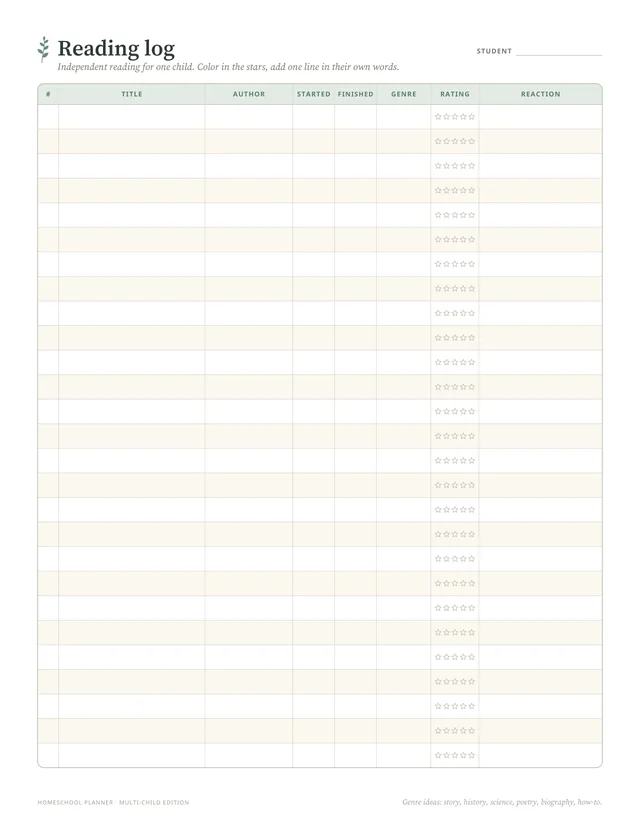
A reading log has to take seconds to fill in, or it stops being used. The planner's log has eight columns:
| Column | Why it helps |
|---|---|
| # | A running count. Children like watching the number grow. |
| Title and author | The core record, and handy for finding the book again. |
| Started and finished | Shows reading pace and which months were busy. |
| Genre | Shows at a glance whether a child reads only one kind of book. |
| Rating | Five stars to color in. Quick, even for young readers. |
| Reaction | One line in the child's own words. This is the column you will want to keep. |
What to skip: minutes per day and page counts. They turn reading into a chore. If you need reading time for an hours record, put a daily total in the hours log instead.
A read-aloud log for the whole family
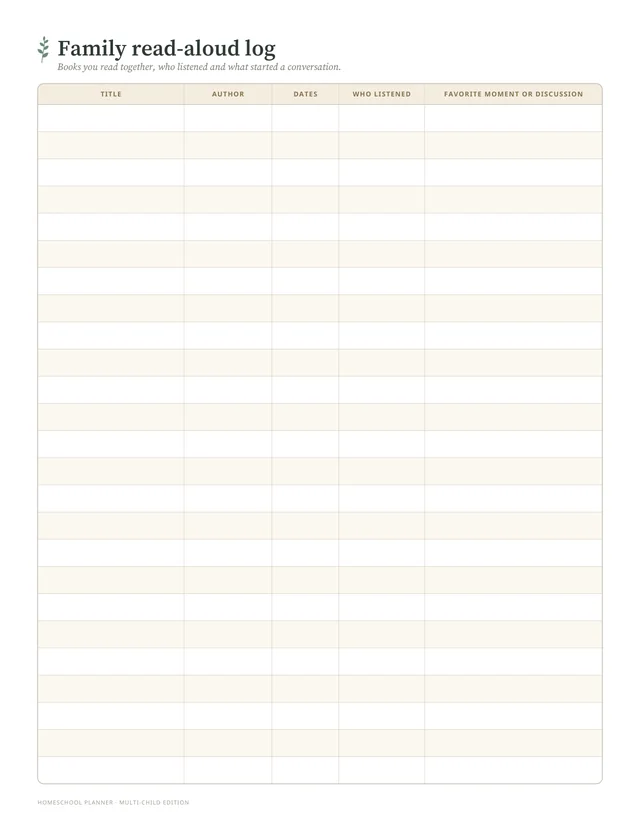
In a home with children of different ages, read-alouds are often the books everyone shares, yet they show up on no child's list. The family read-aloud log records title, author, dates, who listened, and a favorite moment or discussion. After a year it is a record of the books your family read together.
Ideas for the reaction column by age
- Pre-readers: they talk, you write. Or they draw a tiny picture.
- Early readers: "My favorite part was…" with one word or phrase.
- Middle grades: one sentence. Would they recommend it, and to whom?
- Teens: a line on theme or character. Good practice for essays.
Check the genre mix each term
At the end of each term, count the genres on each child's log. If one kind dominates, add a book or two from another shelf to next term's term goals. Shelves to try: stories, biography, history, science and nature, poetry, how-to, myths and folk tales.