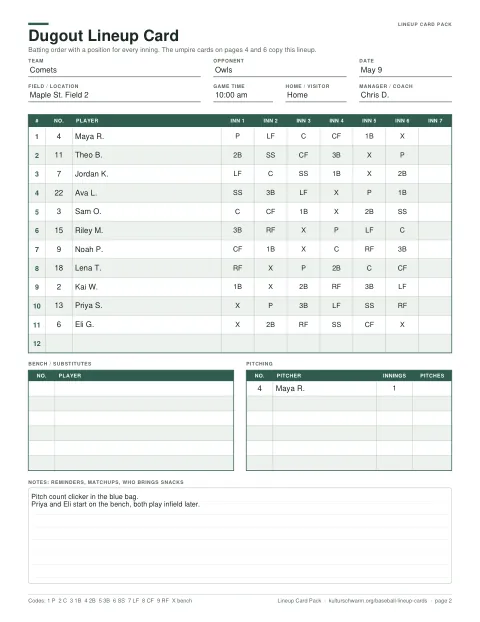
The lineup card is the one piece of paper the umpire, both dugouts and the scorekeeper all rely on. Most disputes in youth games trace back to an unclear card: a missing jersey number, a nickname nobody recognizes, or two copies that do not match. Filled out like this, the plate meeting takes thirty seconds.
Step by step
- Header. Team name, opponent, date, and home or visitor. Add the field if your league plays at several sites.
- Batting order. One player per line, top to bottom, with the jersey number, first initial and last name. The number is what the umpire and the other scorebook track.
- Positions. Write each batter's starting position with the standard codes (
P,C,1Band so on) or the numbers 1 to 9. UseXfor a player who bats but starts on the bench in a continuous order. - Substitutes. List every eligible player who is not in the starting lineup, with numbers. In some leagues, players not listed may not enter the game.
- Absent players. If a rostered player is missing, note it. In leagues with continuous batting, this tells the umpire the order is short on purpose.
- Sign it if your league asks for a manager signature.
- Make copies. One for you, one for the plate umpire, one for the opposing manager. They must match line for line.
At the plate meeting
The home team usually hands its card over first, then the visitors. The umpire reads both, may ask about unclear entries, and from that moment the cards are the official lineups. Changes after this point are substitutions. Report them to the plate umpire, who notes them on their copy.
Writing substitutions during the game
Keep your own copy in the dugout and update it every time you change something. A common shorthand:
| Change | How to note it on your card |
|---|---|
| Substitute enters for a batter | Write the sub's number and name under the original player's line, with the inning: #14 Lee (T4) |
| Defensive switch only | Update the inning column on your dugout card, for example SS to P in the 5th |
| Pitching change | Record the inning and pitch count in the pitching box if your league tracks it |
| Player leaves the game | Draw a line through the name and note the inning. Ask the umpire how that spot is handled. |
T4 means top of the 4th, B4 bottom of the 4th.
Common mistakes umpires flag
- Jersey numbers missing or not matching the uniforms.
- Nicknames instead of names.
- Two players at the same position, or a position left empty.
- Copies that differ because one was rewritten after a late change.
- Handwriting nobody can read on a photo of the card.
Position code reference
| No. | Code | Position |
|---|---|---|
| 1 | P | Pitcher |
| 2 | C | Catcher |
| 3 | 1B | First base |
| 4 | 2B | Second base |
| 5 | 3B | Third base |
| 6 | SS | Shortstop |
| 7 | LF | Left field |
| 8 | CF | Center field |
| 9 | RF | Right field |
| LC, RC | Left-center and right-center, in ten-fielder formats | |
| X | Bench for that inning |
Ready to fill one out? The free lineup card maker prints the dugout card and an umpire copy from your roster. The blank card is there if you prefer a pencil.